
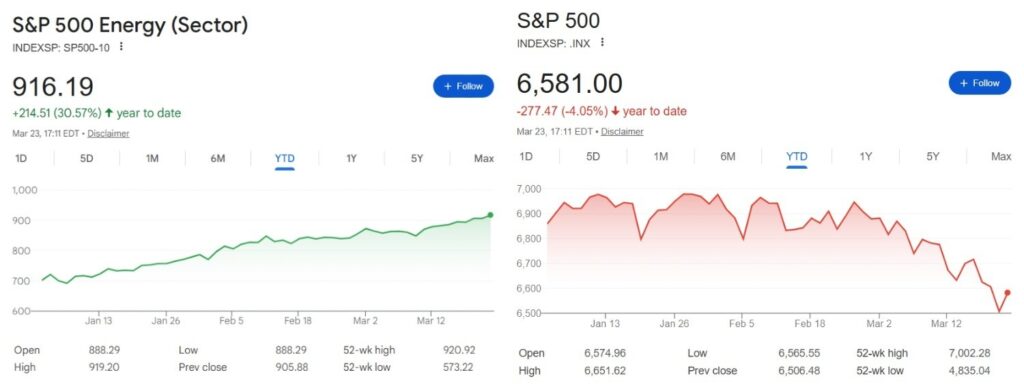
On March 23, Chevron (NYSE: CVX) CEO Mike Wirth indicated that energy stocks could rise further in the coming months, despite the sector already up approximately 30% in 2026.
Specifically, the executive stated that the markets are yet to price in the disruption caused by the Iran war and the closure of the Strait of Hormuz, indicating that crude oil hovering near $100 is merely the beginning.
These comments echo the analysis of numerous other analysts and observers who, in recent weeks, have noted a growing gap between the ‘paper’ oil markets and the actual prices of the physical commodity in the Middle East.
Furthermore, despite the shortages already leading to certain countries imposing gas price caps, considering petrol rationing, and grounding airplanes to conserve fuel, oil tankers now stranded in the Persian Gulf usually take weeks to arrive at their destinations, meaning the impact of their absence is yet to be felt in earnest.
Why Oil stock will rally further in 2026
Elsewhere, oil companies stand to benefit tremendously from such developments. While there will, at least for the time being, be less fuel in the market, the global demand for the commodity cannot be alleviated overnight, meaning their profit margins are unlikely to diminish and could even expand.
Thus, while a 30% rally for the energy sector might usually raise the risk of a correction – especially when the overall benchmark S&P 500 stock market index is down 4.05% in 2026 – the danger of a downturn is all but absent.
Energy sector tailwinds beyond the Iran war
Simultaneously, the long-term outlook also appears rosy. Much like many experts noted that the actual impact of the fossil fuel and petrochemicals supply chain disruptions is yet to be priced in, they also believe the prices of these commodities will remain elevated perpetually.
Indeed, crude oil failed to revert to its relatively low barrel prices following the two crises in the 1970s.
Furthermore, the energy sector and, thus, oil stocks benefit from powerful tailwinds even once the Iran war is removed from the equation.
The administration of President Donald Trump has been exceptionally amicable toward fossil fuel companies and has, since taking over from President Joe Biden, implemented numerous measures to bolster the sector at the expense of the transition to renewables.
For example, the Federal Government removed electric vehicle (EV) credits in September 2025 in an effort to reignite demand for vehicles with internal combustion engines and executed a military operation in Venezuela in January 2026 to bolster American corporations’ access to the country’s oil.
More recently, the Department of the Interior paid a French company called TotalEnergies approximately $1 billion to abandon offshore wind turbines in favor of drilling for gas.
Washington has also begun pressuring the European Union to ease some of its environmental regulations in a move that can also help bolster the demand for the products of the fossil fuel industry.
Featured image via Shutterstock
The post Energy stocks soared 30% in 2026; Here’s why Oil stock are still a buy appeared first on Finbold.